Understanding the Role of API in Logistics Automation
Published on
in
Guides
Reviewed by

Denys Berg is the co-founder and CTO of Phleetto, with 15 years’ experience in logistics digitalisation and transport software.

Summary
Phleetto empowers shippers, carriers, and logistics teams across the UK to move beyond spreadsheets and manual coordination through digitalisation. By adopting API integration, organisations in full truckload freight benefit from automated data exchange, fewer administrative tasks, and more agile delivery management. Fast access to information, direct system connections, and adaptable workflows create tangible improvements in freight matching, payment cycles, and operational efficiency.
Modern logistics demands systems that communicate seamlessly - with every shipment, customer, and carrier touchpoint digitally orchestrated. APIs are essential to this progress. For transport leaders and IT managers, understanding API-driven automation unlocks scalable logistics, delivers cost transparency, and supports sustainable growth.
Below, discover the principles, benefits, technology trends, and implementation steps that define API-led logistics transformation.
What is API in Logistics Automation?
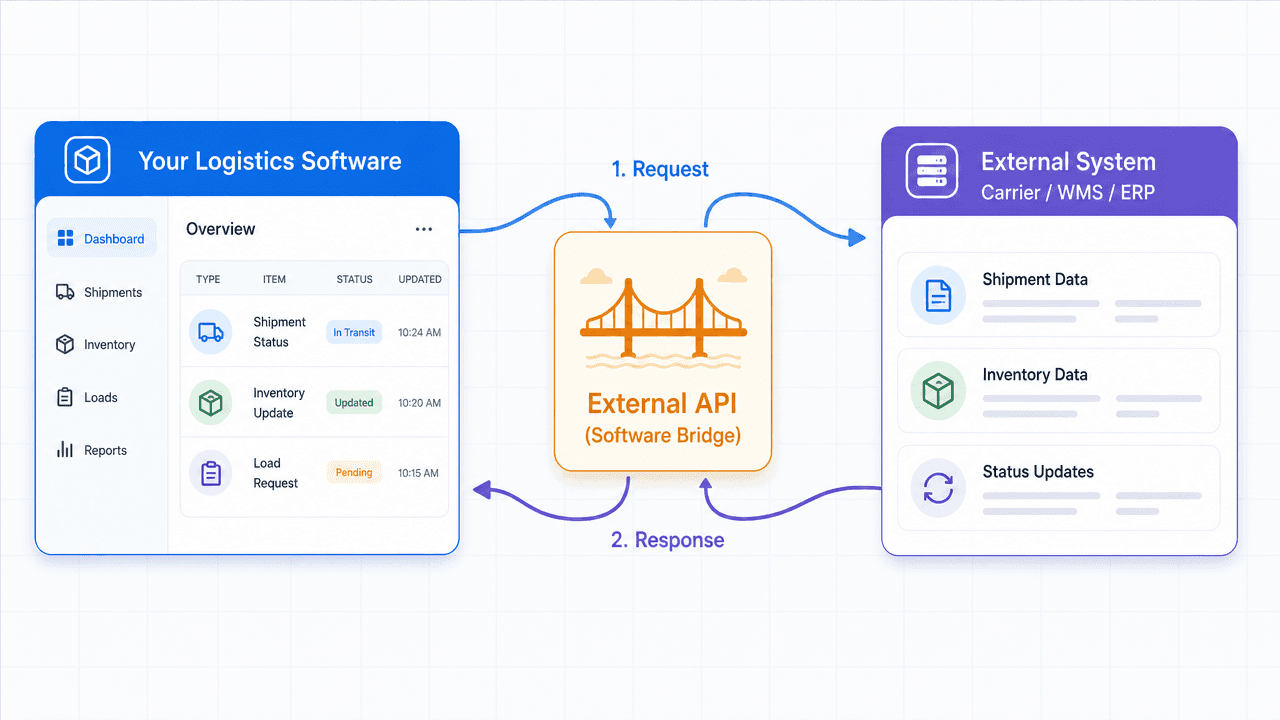
Core Definition: Software Intermediaries
An API, or application programming interface, is the software bridge that allows two different systems to exchange information automatically. In logistics, APIs connect warehouse management, transport management, ERP, and carrier systems for rapid communication.
APIs act as intermediaries, enabling systems to share vital data such as shipment status, load requests, and inventory updates instantly.
They define rules for what data can be exchanged, how transactions occur, and how security is enforced.
This connectivity means orders, updates, and confirmations move directly between trusted platforms without emails or rekeying.
How APIs Enable ‘Talk’ Between Applications
An ERP system can create a transport booking automatically in the freight management software.
Carrier networks receive tenders and can accept loads with instant updates, reducing the need for manual follow-ups.
Proof of delivery and shipment documents upload directly to the shipper, eliminating paper and duplication.
With APIs, logistics teams avoid delays, decrease errors, and keep operations flowing smoothly from booking to delivery.
Key Benefits of API Integration in Logistics
API integration delivers real, measurable value to logistics operations, moving beyond just automation to unlock business agility and customer satisfaction.
Real-Time Decision Making & Dynamic Routing
Immediate updates on carrier status, route disruptions, and shipment progress means teams can reroute or adjust plans quickly.
Dynamic routing algorithms, powered by APIs, factor in live traffic or weather data to suggest the most efficient delivery paths.
Operational Scalability & Transformation
Organisations handling thousands of shipments no longer need to scale up manual management.
Automated load planning and transport tenders across a digital carrier network remove much of the administration.
Execution status and notifications unify communication for all stakeholders, sustaining performance as business grows.
Customers report up to 80% faster coordination, freeing teams for more strategic tasks.
Improved Customer Experience Through Enhanced Visibility
Live shipment tracking keeps everyone informed - customers, in-house teams, and carriers.
Automated alerts notify about delays or ETAs, supporting higher OTIF rates and stronger relationships.
Carriers also benefit: with self-serve document upload and digital progress updates, payment cycles shrink from 30–60 days to as short as 7 days using Phleetto.
To see how digitisation transforms daily carrier processes, explore the Freight coordination platform for carriers.
The Rise of AI-Enhanced APIs in Logistics Automation
From Passive Reporting to Proactive Management
Earlier APIs simply relayed data; now, AI-powered APIs interpret and act on information to prevent problems.
AI-linked APIs analyse transport schedules, vehicle locations, and market indicators, flagging issues as soon as patterns appear.
Instead of waiting for user intervention, they suggest new routes or assign alternative resources.
Predicting Disruptions Before They Escalate
Machine learning models study real-time feeds to anticipate delays, such as traffic congestion or weather problems.
Proactive notifications adjust customer expectations and reduce failed deliveries.
Self-Optimising Logistics Ecosystems
AI-enabled APIs learn from every transaction:
Each successful delivery, exception, or bottleneck informs algorithms that refine future decisions.
This continuous improvement transforms supply chains from reactive to adaptive, with minimal manual input.
The result: automated workflows evolve with operational reality, maximising efficiency.
Feature | Traditional APIs | AI-Enhanced APIs |
|---|---|---|
Function | Share data | Automate & optimise processes |
Issue Response | Manual corrections | Predictive, automated actions |
Decision Logic | Pre-set rules | Machine learning adapts |
Workflow Scope | Static | Continuous optimisation |
Integration Expense | Higher with legacy | Reduced via open standards |
For technical integration approaches and supported protocols, review the Phleetto API Reference documentation.
Current Best Practices & Trends in API-Driven Logistics (2026)
Logistics automation is advancing rapidly, driven by growth in online commerce, supply chain stress, and technology innovation. The logistics automation market across the UK and Europe is projected to reach unprecedented values, with operational agility now a competitive requirement.
Protocol Agnosticism & Reducing Legacy Integration Costs (‘Hybrid Tax’)
Many logistics operations juggle modern APIs and older EDI systems simultaneously - this creates the so-called ‘Hybrid Tax’ of extra integration and IT costs.
APIs built for protocol agnosticism can exchange information with both modern and legacy systems, reducing spend and speeding up onboarding.
Automation Strategies: AI, Robotics, and IoT Integration
Smart automation ties together multiple technologies:
AI enhances routes, forecasts demand, and manages disruptions dynamically.
Robotics take care of predictable warehouse tasks, directly fed by API-originated instructions.
IoT sensors provide continuous condition and location data, improving in-transit monitoring.
APIs orchestrate multi-system events, ensuring data is synchronised for reliable decisions.
Technology | Operational Use | Key Benefit |
|---|---|---|
AI | Routing, delay prediction | Reduced disruptions, smarter planning |
Robotics | Picking, loading | Efficiency, fewer manual errors |
IoT | Temperature/location | Real-time monitoring, compliance |
Open APIs | System integration | Lower cost, quicker deployment |
Market Growth Influences & E-Commerce Delivery Requirements
Increased online orders in the UK intensify pressure on logistics providers to offer faster, more flexible delivery.
Automated carrier matching, live ETA updates, and digital shipment tracking help companies keep pace, improving reliability and driving down cost per delivery.
Actual Phleetto platform users have seen up to 20% cost savings and 80% fewer manual interventions within weeks of implementation.
Interested in scalable, transparent subscription models? View Phleetto pricing plans for a breakdown of features.
Common Pitfalls & Challenges in API Implementation
Efficient API integration can transform logistics - but only when challenges are addressed.
Integration Complexity & Data Silos
Integrating APIs with legacy systems may result in data silos due to misaligned reference formats.
Overly customised connectors can increase maintenance workloads and total cost of ownership.
Solution: Standardise data fields and adopt platforms built for interoperability to support clean, unified flows.
Security Risks in Third-Party Connections
APIs, by their nature, expand access to your logistics data.
Improper authentication can expose shipment or customer information.
Data in transit is at risk without strong encryption and regular log monitoring.
Solution: Deploy role-based access controls, encrypted channels, and periodic audits to protect sensitive data.
Careful planning and controls are essential to protect your shipments and business reputation.
Step-by-Step Guide to API Workflow Automation in Logistics
Creating an effective API-driven workflow involves targeted preparation and ongoing operational checks. Follow this process for sustainable results:
Audit Existing Workflows
Chart step-by-step processes for transport planning, assignment, and coordination.
Highlight areas that require repetitive manual work or exhibit frequent errors.
Choose Protocol-Agnostic Solutions
Select transport management software supporting major data formats including XML, JSON, and EDI.
This avoids custom builds for each partner and eliminates ‘Hybrid Tax’.
Standardise Data Definitions
Ensure all integrated applications share common references for locations, carriers, and loads.
Integrate AI for Proactive Management
Deploy predictive models to anticipate disruptions; pilot these in focused regions for validation.
Select AI solutions that learn from historical and live operational data.
Test Real-Time Monitoring
Simulate order progress and track how rapidly data flows from booking to delivery confirmation.
Stress-test against hypothetical network incidents.
Secure Every API Endpoint
Require authentication using rotated keys or modern standards such as OAuth.
Track and review all third-party accesses and permissions regularly.
Monitor and Refine Performance
Use dashboards to spot slowdowns, failures, or unexpected surges.
Collect operational feedback, then iterate on workflow designs for continuous improvement.
Comprehensive API integration is detailed in the Phleetto API Reference documentation.
FAQ: Common Questions on API in Logistics Automation
What is the primary role of an API in logistics automation?
APIs connect diverse logistics systems - ERP, transport management, carrier networks - enabling seamless, error-free data flow and process automation.
How do AI-enhanced APIs differ from standard APIs?
AI-enhanced APIs move beyond data exchange by analysing patterns, foreseeing problems, and automatically suggesting quick solutions, not just reporting status.
What is the ‘Hybrid Tax’ and its impact?
‘Hybrid Tax’ describes the additional resource and financial burden associated with running both modern API and legacy EDI systems in parallel. Protocol-agnostic APIs help organisations avoid these costs.
Can API integration reduce shipping costs?
Yes, by optimising carrier allocation, and freeing staff time for value-added work.
API-driven automation can decrease spending by automating manual processes,
Why is real-time decision making critical for last-mile delivery?
Last-mile delivery is sensitive to change; real-time API updates empower logistics teams to reroute, inform customers, or resolve issues before they escalate, supporting higher service levels.
What are common security challenges in API automation?
Unsecured APIs are susceptible to unauthorised access and data leaks. Best practices include strong authentication, strict access controls, and encrypted exchanges.
Data Privacy and Compliance Considerations for API Integration
When deploying API-driven logistics, compliance with UK data protection law is imperative.
Legal Requirements Under UK Data Protection Law
Logistics businesses must have a documented legal basis for all personal data collected, shared, or processed using APIs.
Data retention periods should reflect operational requirements and legal mandates.
Best Practices for Protecting Sensitive Information
Protect all integrations with strong authentication and end-to-end encryption.
Limit access strictly to authorised users and document every data transfer with audit logs.
When using external partners or third-party processors, verify adherence to relevant data protection standards and store data within the UK or EEA where feasible.
User Rights and Consent Management
Individuals hold rights to access, correct, or erase data attributed to them.
Transparent privacy policies and easy consent withdrawal procedures are critical.
To understand these obligations in detail, read the Phleetto Privacy Policy.
The information presented here is for general guidance on logistics technology and legal requirements. Please seek advice from qualified professionals before making business or technical decisions related to API integration or compliance.
Next Steps for Logistics Teams
API-led automation is central to running a responsive, efficient, and scalable transport operation. By integrating advanced digital tools, you reduce errors, ensure compliance, and open new possibilities for growth - whether you’re a shipper, a dedicated carrier, or part of a logistics team aiming to modernise processes.
Experience the difference with the Phleetto road freight software platform - tailored for digital-first coordination, workflow automation, and full UK compliance. Explore transparent pricing, dedicated support, and a robust carrier network: sign up or begin your free 14-day trial to unlock next-generation efficiency in full truckload logistics today.


